
The End Of The Silent Age – In America!
In 1927, Walt Disney was winding down his mixed-media “Alice Comedies” in favour of “Oswald the Lucky Rabbit“. But 1928 was the year that the Mouse roared. Disney only made three cartoons that year that didn’t feature Oswald, but one of them was media-defining. It was, of course, “Steamboat Willie” (Celebrity Productions / Walt Disney Studios, November 18th 1928). Walt and Mickey had just created the first synchronised sound cartoon that anyone cared about, and started the Golden Age of American Animation.
Yokohama Cinema Shokai & Murata Yasuji
Back in Japan in 1923, a film-maker called SAEKI Eisuke had founded Yokohama Cinema Shokai. According to the company’s modern inheritors, Yokoshine D.I.A, Saeki and his cameraman Takamasa Aihara were the first camera crew to reach Tokyo after the Great Earthquake of the same year. Only two frames of the film survive to the present day.
The new company needed animation for their live-action film titles, so they set up their own animation department. They hired Saeki’s friend, former signboard painter MURATA Yasuji, to run it. Murata had studied under YAMAMOTO Sanae, and was able to develop his own paper cutout techniques.
Murata’s early work for the studio was in making intertitles for educational films and imported works from America’s Bray Studios. But he was soon promoted to producer, and asked to helm the “Athena Library Series”, an assortment of animated fairytales, fables and folklore cartoons. The company distributed the films directly to schools and home cinemas. Sometimes, if the moral message of the animation was considered important enough, a government department would foot the bill.
“MONKEY AND THE CRABS”
His work for Yokohama Cinema Shokai, alongside writer CHUZO Aochi and cinematographer YUKIKIYO Ueno, would last well into the 1930s. Together, they would produce about 50 cartoons. I’ll be looking at everything which has survived to the present day. Thankfully, that includes his first film under the Athena brand; “Saru Kani Gassen” / “Monkey And The Crabs” (Yokohama Cinema, May 1927).
It’s believed to be the same story as the lost work from KITAYAMA Seitaro in 1917. A father and son crab have planted some persimmon seeds that they got from Sarukichi the monkey. Unfortunately, crabs can’t climb trees, so they can’t pick the fruit. Sarukichi steals the lot, and when the father crab gives chase, the monkey kills him. Boy crab Kanitaro gets advice from his three uncles, a chestnut, a bee and a mochi mortar – look, it’s a fairytale – and the quartet break into Sarukichi’s house and kill him. Those must have been some good persimmons.
Murata makes several interesting artistic choices straight away. His animals are clearly humans in costumes, which is new. He puts what’s essentially a chalkboard on-screen at the film’s start, and writes the plot on it. The dancing and repeated dialogue at the beginning imply a backing song was being used. Alas, there’s no surviving soundtrack, so it’s impossible to say for sure.
Was it entertaining? To a point. Yes, it’s funny to watch the crabs sidle everywhere, including a failed attempt to get up a ladder. It’s also impossible not to look at Kanitaro’s uncles without thinking of Aqua Teen Hunger Force. Unfortunately, all the plot-essential murdering means that this falls well short of the pre-teen frolic that it could have been. “Monkey And The Crabs” ends up at a bang-average 5/10.
“HOW THE OCTOPUS LOST ITS SKELETON”
Murata’s next work was “Tako No Hone” / “How The Octopus Lost Its Skeleton” (Yokohama Cinema, Nov 1927). The version I watched was restored by American historian and octopus buff, Aaron J. Cohen, in 2017. As he advised, I watched it at half-speed, so it comes in at just under ten minutes.
The Sea God’s daughter is unwell, and the only cure is more cow- sorry, wrong script. There’s a cure, but the sources I read disagreed on the translation. It’s either the metaphorical courage of a monkey, or its literal liver. And the animation doesn’t end up helping.
Anyway; a brave octopus travels to Monkey Island – no – on a turtle’s back to get the cure. The monkeys are wearing grass skirts and dancing to a jazz band. Oh, dear. The octopus convinces one of them to go back to the Dragon Palace with him. But after an incident with a whale, the monkey claims to have lost his nerve. Or, again, possibly his actual liver.
When the monkey finds out that’s all the octopus wanted, a fight breaks out and the whale takes the chimp back home. The octopus reaches inside himself and pulls out his bones, and sends the turtle back to the Sea God with a punning apology.
When Murata sticks fish heads on human bodies, there’s a pleasingly absurd effect. His water animation is superbly well done, too. But this time around, his monkeys are obviously racist, and the entire story rests on a pun that I didn’t understand properly. Until someone can help me with that liver/courage thing, I can’t score “Tako no Hone” any higher than 2/10, but I still appreciate the work that Mr. Cohen has put in here.
“BLOSSOM MAN”
Murata’s next release was “Manga Hanasaka-jiji” / “Blossom Man” (Yokohama Cinema, July 1928), and it’s another Athena film based on a Japanese folktale. The original was 14 minutes long, but what survives is down to 5, and it’s missing some of its expository intertitles.
An elderly couple’s dog sniffs out coins in its owners’ garden. A horrible neighbour borrows the dog and mistreats it. When all the dog can find is a jar of frogs and snakes, the neighbour kills it. We see the elderly couple plant a tree next to where the dog died, and they make a mallet and mochi mortar from the wood. Instead of getting rice cakes out of the mortar, more coins appear. But it only works for them, so the neighbour burns it.
Then there’s a huge jump, and the old man is now the Blossom Man, being presented to the local lord. He throws ashes – which I’m told are from the mortar, but it’s not in the cartoon – over a tree, which blossoms out of nowhere. The neighbour pretends to also be the Blossom Man, but he can only make a mess, and guards chase him away with arrows. The old man is rewarded and a dance party ensues before the finish.
That’s an awful lot of plot for a very short cartoon, and the lost footage absolutely guts the story. If it wasn’t for that I’d probably be looking to give this high marks, but in the circumstances “Blossom Man” can only get 2/10. This was a really frustrating watch.
“ANIMAL OLYMPICS”
Murata closed out his 1928 with the first ever “sports anime”, if you squint at it a bit. Earlier that year, the ninth modern Summer Olympics took place in the Netherlands, and for the first time the Japanese won gold, in the men’s triple jump and 200m breaststroke. Understandably, Murata wanted to capitalise on that success, and that led to “Doubutsu Olympic Taikai” / “Animal Olympics” (Yokohama Cinema, November 1928).
Cards on the table; until certain recent events, I was an Olympic nut. I was genuinely impressed by the accuracy in this cartoon; Murata puts in a suitably boring speech from a pointless dignitary to open, and thinks to put in the Olympic Oath! Even the otherwise superb “Animalympics” (Lisburger Studios, 1980) didn’t do that. Various animals compete in a variety of track and field events, twisted to allow for their nature and loaded with sight gags and simple jokes.
There are a couple of elements that I think were inspired by American cartoons; a pole vault bar hanging impossibly in mid-air is a surreal touch of a kind I haven’t seen in Japanese animation before this. But it’s funny. It’s all funny, an assortment of pleasingly silly and light-hearted vignettes. I laughed out loud at one spot of unexpected continuity, and I was pleasantly surprised at the lack of easy, nationalistic animal gags. The metric mile-running bulldog isn’t obviously British, for example.
This is simply excellent; well-animated, with no nationalism or katana-rattling, just good clean fun, with handshakes and shared sports-beast-ship throughout. You could argue that it’s promoting fitness and exercise, but that’s a very po-faced interpretation with nothing in the text to support it. “Animal Olympics” is in the best traditions of the Games, and gets an 8/10.
FIN
There is also a fragment of Murata’s “Bunbuku Chagama” / “Tanuki Teapot” (Yokohama Cinema Shokai, July 1928) available1 through Kobe Planet Film Archive, but it’s not quite enough to review. But it does round out what I’m going to cover for today.
Thanks for this post go out to the Japan Society of Civil Engineers, to Cartoon Research, to Aaron J. Cohen, and to Kobe Planet FilM archive. And as always, I must thank the blog’s four pillars; AniDB, whose peerless database has helped me work out what to look for, the Japanese Film Archive, who have given me the material to actually watch, Jonathan Clements & Helen McCarthy’s “Anime Encyclopedia”, and Clements’ “Anime: A History”.
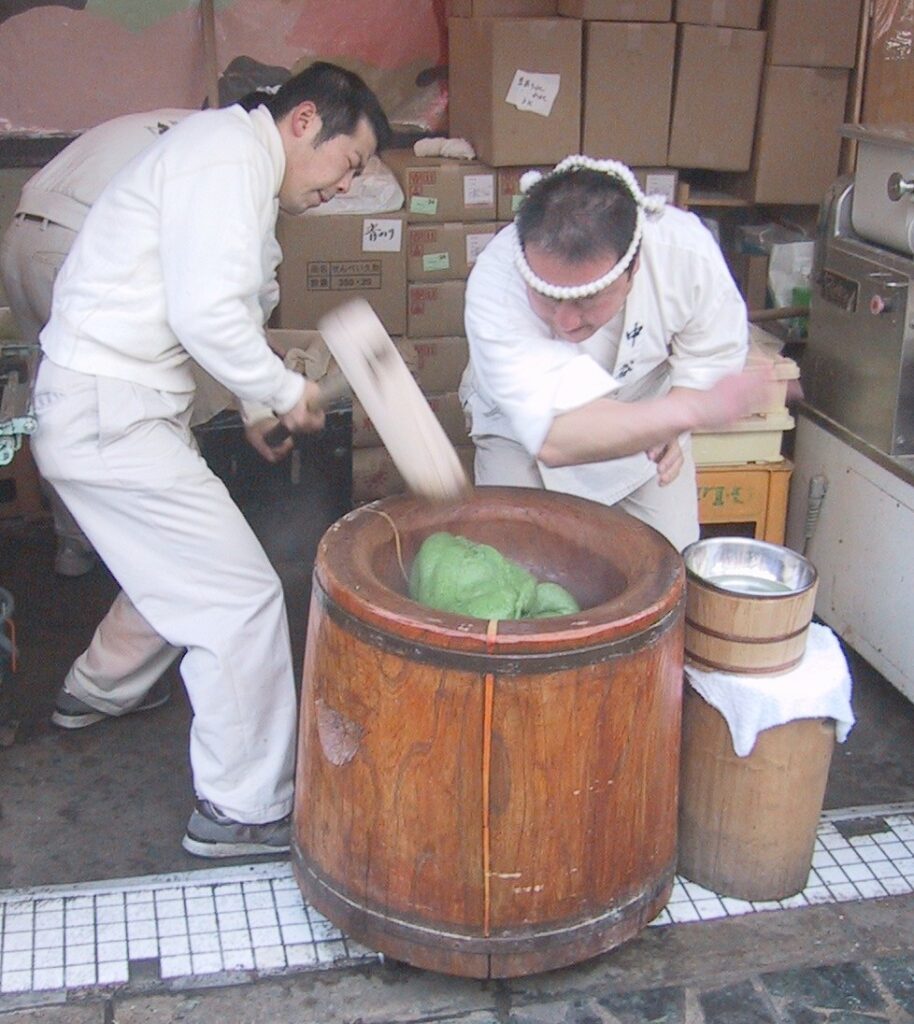
The image above was provided by Chris 73 / Wikimedia Commons, CC BY-SA 3.0, via Wikimedia Commons.

- Probably not the best translation, but I couldn’t resist it. ↩︎
Leave a Reply