
This is a sidebar, about the Sino-Japanese War and its sequels in South-East Asia. It is, technically, skippable. But everything in this piece is essential to understanding the animation produced in Japan before World War II. Sometimes it sounds like I’m going on a long winding tangent; it always makes sense in the end.
MEIJI RISES
On July 14th, 1853, Commodore Matthew Perry – yes, really – was allowed to land his Black Ships – four cutting-edge steam-powered warships – at the port of Kamakura, in what’s now Yokosuka, at the mouth of Tokyo Bay. While his fleet had arrived under a flag of truce, he carried a letter making it clear that if he wasn’t allowed to visit, he was ready to fight. And the Japanese knew they would lose. And so Japan began to open diplomatic relationships with the rest of the world.
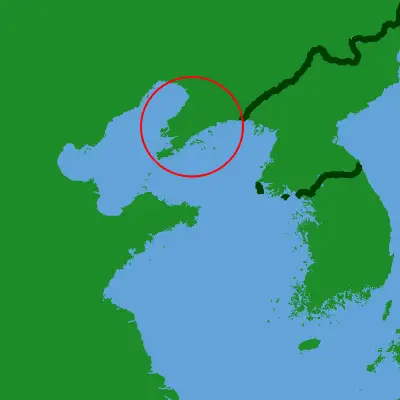
By the time the story of Japanese animation began, Japan itself was larger than it had ever been before. Under the celebrated Emperor Meiji, her Imperial status had truly been earned. The First Sino-Japanese War – spoilers! – had been vastly successful for Japan and absolutely catastrophic for China. In the eight months between July of 1894 and April of 1895, the ruling Qing Dynasty ceded the entire Korean Peninsula and the island of Taiwan to the Empire of Japan. They would have lost the strategically important Liaotung Peninsula as well, if Western diplomats hadn’t stepped in to prevent it. In 1898, China ended up leasing it to the Russians instead.
CIXI FALLS
Most importantly, though, losing the War wrecked the faith of the Chinese people in their ruling government. In the aftermath, various foreign powers set up diplomatic shop in the capital, Beijing. The next five years happened to see flooding and droughts in Northern China, and various rebel groups in the towns and villages there decided to use the generally foreign and specifically Christian imports as scapegoats for their problems.
In late 1899, these rebels started wrecking foreign-owned properties and killed any Christians they could get their hands on. In June 1900, they converged on Beijing and beseiged the diplomatic quarter. When an Eight Nation Alliance – with Japanese forces in the lead – invaded to try and lift the siege, the Chinese Dowager Empress Cixi chose to back the rebels and declared war on all eight nations involved, and another three for good measure.
If the British and Americans had known about martial arts at the time, we would probably call it the Kung-Fu Uprising today. They didn’t, but they knew punching when they saw it. So it got called the Boxer Rebellion. And it didn’t take long to put down.
The war was over by September of 1901. As always happens, the victors took their spoils. Beijing was occupied by the Alliance for a year, and Russia used the war as an excuse to occupy Manchuria, the North-eastern portion of China. They already had various leased territories there, and an extensive railway network. In theory the peace treaty after the war meant that Russia had to leave, but they weren’t interested.
JAPAN TURNS ON RUSSIA
Japan were able to station troops in various Chinese cities to help “keep the peace”, and the war did a lot for the reputation of Emperor Meiji. But they weren’t done fighting in China. In 1904, after negotiations with Russia to stabilise the region broke down, the Japanese unexpectedly attacked their holdings on the Liaodong Peninsula instead. After eighteen months of war with a “superior European power”, the Japanese won a comprehensive and bloody victory.
Japan took control of the southern half of Sakalin Island, which at the time of writing is Russian territory. It’s just off the coast of the eastern edge of Russia’s mainland, and only a little further away from Japan’s northern-most island, Hokkaido. They also gained control of the Liaodong Peninsula, and that railway network. The South Manchurian Railway linked Japan’s possessions together and gave them an easy route into the East Asian mainland. And it made the Russians absolutely furious.
The Emperor Meiji had, by 1907, also declared that education and military affairs were strictly under his control, and not that of his government. This meant that children were being taught that all Japanese people were the Emperor’s children and that he should be worshipped. It also allowed the Japanese army and navy a significant degree of independence and freedom of action. Both policies would end up having catastrophic consequences for Japan.
fin
Let me make it clear; every single fact I’ve just told you shows up, at some point or other, in Japanese animated film, long before Japan decided to pick a fight with the Americans. It would be lovely if war, politics and military history could be kept out of animation. But even in what was notionally peacetime, the Japanese government and Emperor had no intention of letting that happen. These wars, and the ones that would follow them, ended up driving the plots of Japanese animations for years to come.
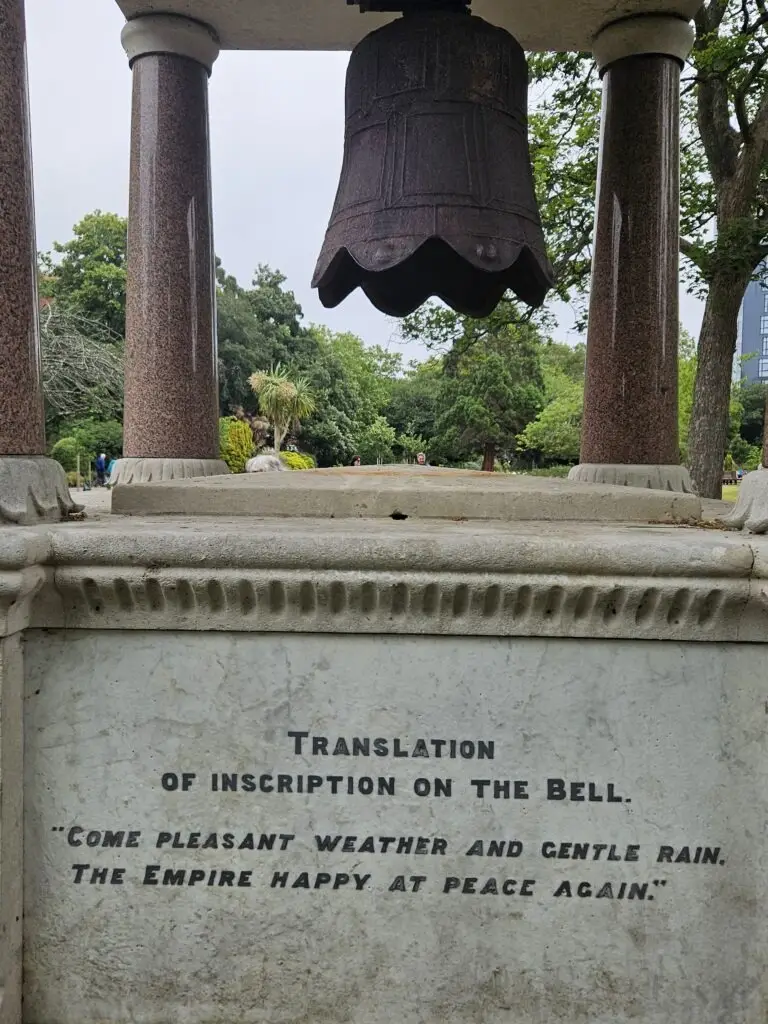
That ends this sidebar. I compiled it from various Wikipedia pages, and from “Hirohito And The Making Of Modern Japan”, by Herbert P. Bix. Naturally, any errors are my own, as is the photograph of the bell taken from China during the Boxer Rebellion, which now stands in Victoria Park in Portsmouth in the UK.

Leave a Reply