
THE SECOND GENERATION: YAMAMOTO
The Great Kanto Earthquake was, quite understandably, the last straw for one of Japanese animation’s first pillars. Studio head KITAYAMA Saitaro threw in the towel and sent his family away to Wakayama – some 550 km/350 miles away. He went to work in Kyoto for live action film-makers, Makino Kyoiku Eiga.
Enter his apprentice, director YAMAMOTO Sanae, who seems to have had a stubborn streak and a dry sense of humour. As a young adult, Yamamoto’s family wanted him to return to their kimono-selling business. Instead, he kept running away to art school. That’s where Kitayama found him, hiring him to Nikkatsu Studio in 1917. Once that year’s animation bubble burst, Kitayama took Yamamoto with him to his new studio, Kitayama Eiga Seisakujo.
THE HARE AND THE TORTOISE RUN
In 1924, once his old boss had left animation for good, Yamamoto stayed in Tokyo. Somehow, he managed to take whatever was left of his boss’s studio and created three saleable animations with it. Jonathan CLEMENTS generously calls it “a branch of Kitayama Eiga”, in his indispensible “Anime: A History”1. The first of the three cartoons was “Usagi to Kame” / “The Hare And The Tortoise” (Kitayama Eiga, 1924).
You know the story, of course, it’s one of Aesop’s most famous fables. An arrogant hare challenges a slow and steady tortoise to a race. Confident in his victory, the hare takes a nap before the finish line. But the tortoise doesn’t stop, and ends up winning by a nose.
This particular version is based on a song from the period, which the characters sing along to. Alas, the soundtrack is lost. But the art is beautiful, especially the backgrounds. This is also the first of countless puns to show up in this project. The noise that Japanese crows make is “aho!” which also means “dummy”, and that’s the noise that wakes the hare up. It’s fine, although the lack of sound hurts it; “The Hare And The Tortoise” scores 5/10.
Yamamoto’s other two cartoons for Kitayama Eiga were “Yubin no Tabi” / “The Mail’s Journey” (1924) and “Tonshi Hakashi” / “Doctor Ready-Wit” (1925). The next sentence is going to come up a lot in the months to come. Neither cartoon has survived to the present day.
LEAVE YOUR GRANNY AT HOME
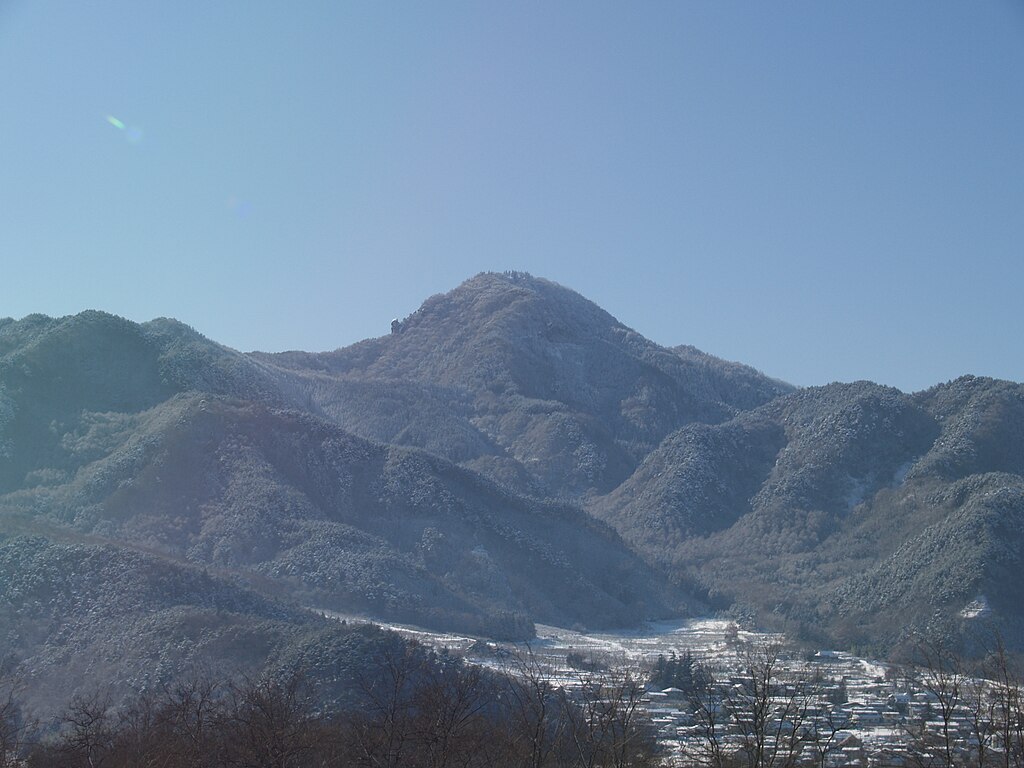
But those films allowed Yamamoto to put his foot in the door of the animation industry. He left Kitayama Eiga in 1925 and hired a letterer and photographer. Between them they were able to create “Ubasuteyama” (Tokyo Manga Club, 1925). That’s another name for Mount Kamurigi, a peak in Nagano Prefecture, and it’s called that because it’s associated with the mythical practice of Ubasute; taking your elderly relatives halfway up a mountain and leaving them there to die. No-one in Japan seems to have actually done it, but the myth got turned into this animation.
Once upon a time, there was a lord who hated old people, and Ubasute was the law. A young man decided to hide his elderly mother away instead, and when a neighbouring lord sent an envoy with a pair of puzzles, and a threat of invasion if they weren’t solved, the wise old lady helps her boy with the answers. The lord offers the son a wish for saving his lands, and he wins his mother’s life with it. The law is changed, and everyone’s happy.
The backgrounds and transitions that Yamamoto uses here are very well done, and they all feel like they were taken from live-action film. The fan that spreads to reveal the evil lord at the beginning is particularly good. That said, the characters here are drawn at the same level of complexity regardless of how closely we’re looking at them. It means that, in particular, their faces are too detailed to see properly unless they’re in close-up. But that’s a minor flaw in a well-told, well-created modern fable.
I really enjoyed it, and so “Ubasuteyama” scores 7/10. I wasn’t alone; Yamamoto’s animation was a solid success, selling almost 100 prints. That doesn’t sound like a lot today, but it was easily good enough for him to set up his own studio. It also marks the point where someone in government noticed him.
AN EDUCATIONAL POT
The Japanese Ministry of Communications had been the first to realise that animation was a way of getting their messages across to the people, back in 1917 with Nikkatsu’s “Mischievous Post”. By 1921, the Japanese Ministry of Education had caught on to the idea of using animation for “pedalogical purposes”3. Usefully for Yamamoto, in 1925 the Ministry put aside an annual sum to fund educational cartoons. It’s fair to say, as Clements does, that until the end of the War “such ‘invisible’ productions comprised the majority of Japan’s animation output.”4
Yamamoto’s first film to benefit from this fund was “Tsubo” / “The Pot” (Yamamoto Manga, 1925), a line-drawn combination of “The Fisherman And The Genie” from “One Thousand And One Nights”, and a story about a lion and a fox which the Japanese Film Archive claims comes from Machiavelli’s “The Prince”.
The thing is, I went and looked, and it’s not there. Machiavelli talks about foxes and lions as far as ruling styles are concerned, but there are no instructional fables in the text at all. So where did it come from? Japanese folkloric foxes don’t usually interact with other animals. They find humans much more fun to mess with. But this isn’t a standard European fable either, and not just because of the kangaroo who turns up in the third act. I’m inclined to attribute this part of the story to Yamamoto himself.
NO NEED TO ROO THE DAY
African marsupials aside, Yamamoto’s done his research. His human characters are dressed in an appropriately North African way, although his style hasn’t aged all that well. His characters have long, skinny legs, bulked out by sirwal, or harem trousers, making them look dangerously spindly. Their detail levels are still always the same. That said, Yamamoto’s background design has improved even more, and it was already great.
He gives each character comic-book style speech bubbles, saving whole-screen text to fill in transitions in the plot. When the fisherman character sings, the words fly out of his mouth and neatly line up into readable text; both of these are very clever choices. I bet the kids giggled at seeing the fox get gobbled up by the crocodile at the end, but I wouldn’t show that to younger children these days. Unfortunately, the film does go on a bit, and the closing moral is clumsy even if it is supported by the original text. “The Pot” scores 4/10.
DISEASES SPREAD
But my opinion clearly wasn’t shared by the Ministry of Education. They decided to keep working with Yamamoto, and their next project with him was a public health information film, the suitably gross “Byoudoku no Denpa” / “Diseases Spread”7 (Ministry of Education, 1926). It has some very good urban background work, but again his characters suffer at mid-range. I have to confess that I struggled to watch this. It scores 4/10, and I strongly advise against clicking that link unless you have a strong stomach.
Based on these films, it would be fair to assume that Yamamoto has a long and fruitful career ahead of him in animation. And you would be absolutely right. But that was everything he made before 1927.
fin
Next time, I’ll talk about a returning pillar, a new icon, and the abrupt ending of an era. As usual, I want to thank AniDB, whose peerless database has helped me work out what to look for, the Japanese Film Archive, who have given me the material to actually watch, Jonathan Clements & Helen McCarthy’s “Anime Encyclopedia”, and Clements’ work on “Anime: A History”. The image of Mount Kamikuri was provided by Windshear, CC BY-SA 3.0: https://creativecommons.org/licenses/by-sa/3.0, via Wikimedia Commons.
- “Anime: A History – Second Edition”, Clements, p. 60, 2023 ↩︎
- Miyao Daisuke, “Before Anime: Animation and the Pure Film Movement in Pre-war Japan”, Japan Forum 14.2 (2002), p. 203, in Jonathan Clements “Anime: A History – Second Edition”, p. 61, 2023 ↩︎
- Anime: A History – Second Edition”, Clements, p. 61, 2023 ↩︎
Leave a Reply