
CONTEXT IS FOR KINGS
From this point on, I’ll be covering Japanese animation a year at a time. Until, of course, I can’t.
Something important happened in America in 1932, at least as far as animation was concerned. No, not the debut of Pluto, or the premiere of the wonderful “Minnie The Moocher” (Talkartoons) starring Betty Boop and jazz singer Cab CALLOWAY, and directed by Max FLEISCHER.
Disney made the jump to colour. Their first 3-colour-process Technicolor film was a Silly Symphony called “Flowers And Trees”, and it won the first Oscar for an animated short. It went so well that Uncle Walt signed a deal making the technique exclusive to Disney until 1935, forcing other studios to use inferior colour processes. Some things never change.
War In China
The Japanese military hadn’t changed either. In January 1932, in the divided city of Shanghai, in what’s now Eastern China, a group of nationalist Japanese Nichirin Buddhists triggered The Shanghai Incident. It was a five-week war between the Japanese and Chinese armies which saw thousands of deaths, civilian and military alike. It took the intervention of the League of Nations to stop the fighting.
The Japanese Army would win the war against the Republic of China and establish their puppet state, Manchukuo, at the end of February. A week later, the war in Shanghai ended in a truce. Both wars had taken place without the authorisation of the civilian government in Tokyo, although they shrugged and supported their army once the killing had started.
By 1932, only three of the nine men who had served as Prime Minister since 1917 were still alive, and two of those six deaths had been assassinations. After a failed coup in late 1931, elements within the Japanese military decided that their leadership was too weak. On May 15th 1932, eleven young Japanese naval officers, with the support of army cadets and right-wing civilians tried again. They failed, but in their attempt they murdered Prime Minister INUKAI Tsuyoshi. Which made it three of ten. Inukai had only been elected in February.
Charlie Chaplin In An Assassination Attempt
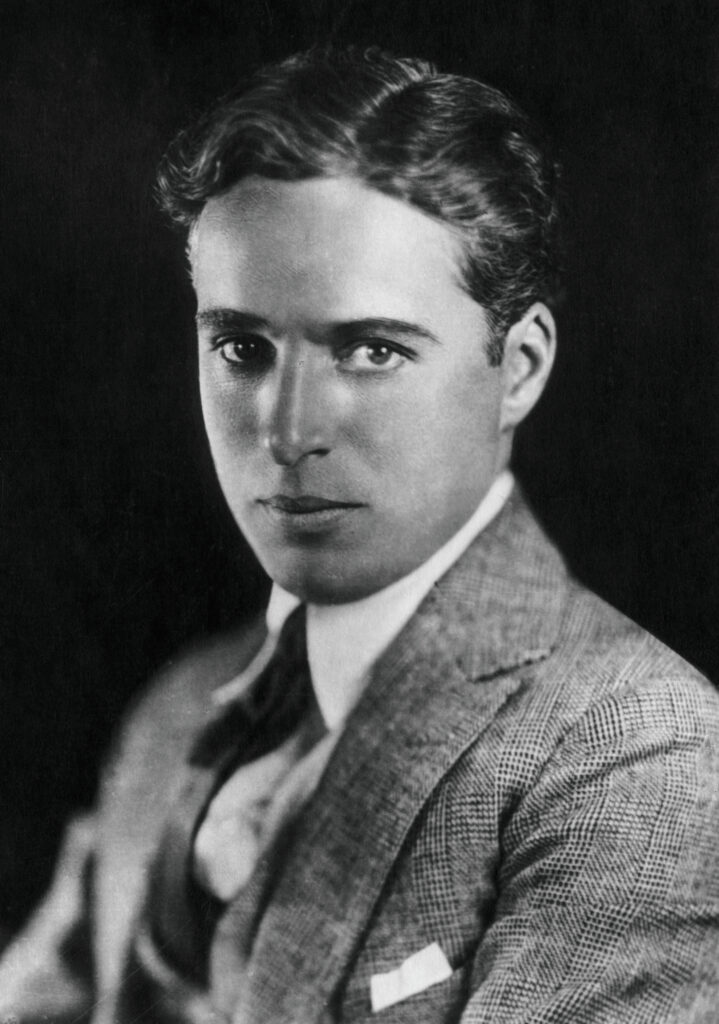
Undated photograph.
In several senses, the coup failed. The officers timed the attack to coincide with a visit from British silent movie star Charlie CHAPLIN. Chaplin was hugely famous in Japan, and he was scheduled to meet Inukai on the date of the coup. But Chaplin loved Japan back, and was somehow a fan of sumo wrestling. So he chose to go to the 1932 Summer sumo tournament with the Prime Minister’s son instead. They both survived the attempt as a result.
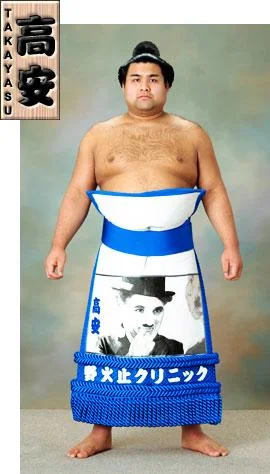
One of the conspirators, KOGA Kiyoshi, claimed at his trial that killing Chaplin would have “ma[d]e the relationship between Japan and the United States difficult”. Ironically, all it did was solidify Chaplin’s iconic status in Japan; sumo wrestlers are still turning up to pre-match rituals wearing ceremonial aprons with his face on them today.
As a compromise to avoid the military takeover of the government, SAITO Makoto, a retired Admiral who had moved into politics, became Prime Minister of a government of “national unity”, without party affiliation but with the confidence and support of Emperor Hirohito. In theory, this was a return to stability. But in the long run, the assassins won. They had enormous public support, and were sentenced incredibly lightly. Even Saito’s own Army Minister, noted fascist ARAKI Sadao, applauded Inakai’s assassins as “irrepressible patriots”.
And in any case, Manchukuo was Japanese now.
YAMAMOTO SANAE RETURNS
Once again, YAMAMOTO Sanae is trying to put quality over quantity. His studio only produced one cartoon in 1931, and they only produced one in 1932. It was “Kyoudai Koguma” / “The Bear Brothers” (Ministry of Education, 1932), and this time the Ministry made sure they got top billing. We only see Yamamoto’s name at the very end.
“The Bear Brothers”
We meet a pair of very flat-footed, fuzzy-eared bears. Their mother sends them outside to play, and she warns them to steer clear of humans. They do as they’re told for a while, until they encounter a human with a rifle and a dog. The hunter is vewwy, vewwy quiet and takes a potshot at the bears, and the inevitable chase ensues. Thankfully the hunter knows better than to send his dog into a bears’ den.
Mummy Bear teaches her children to walk upright, and the pair find long sticks and leaves to stand in for rifles and caps. The bears meet some other animals, and pretend to shoot and throw grenade-rocks at them. The other animals get confused, thinking they’re really humans and run away for a bit. Then they work out the joke and everyone laughs.
But that distracts the animals, and the hunter comes back and gets the drop on them. A battle ensues – which, given Japan’s political situation in 1932, is in rank bad taste – and the bears only get away because they go back to running on all fours.
Thankfully, Not Propaganda
Yamamoto tries to draw the bears in a surreal, squishy American style here, and I’m not sure it works properly. There’s a lot of animals line-dancing, though, and he was on firmer ground there. even if the missing audio hurts the cartoon a bit. “Be Yourself” is a perfectly fine moral, but this was still quite a saber-rattling film.
I feel fine grading it, though; “The Bear Brothers” was bang-average, and so it gets 5/10.
KIMURA THE PORNOGRAPHER
Of all the animators I’ve watched since starting this project, none had me more certain that they were right-wingers, committed to the Imperial Japanese project, than KIMURA Hakusan of Asahi Kinema. His propaganda works were chilling, and his other cartoons were powerful and aimed clearly at adults.
But then I discovered two things about him. While it’s long-lost, the only film we know for sure he made in 1931 was “Slave Wars”, for Prokino, the left-wing Japanese Proletarian Film Union. Which calls my assumptions into question, and I never object to that. But the second thing is entirely different. Kimura directed the first hentai; the first Japanese animated pornographic film.
It wasn’t the first ever dirty cartoon, of course. There had been decades of salacious seaside filmreels already. The first pornographic cartoon that didn’t fade into live-action filth was made as a joke for an American animation industry party in 1930. It might have been to celebrate an important anniversary for ground-breaking cartoonist and animator, Winsor McCay.
No, I’m Not Linking To It
Whatever it was for, various animators from various studios combined to make, sigh, “Eveready Harton In Buried Treasure”. Apparently everyone in the exclusively male audience thought it was hysterically funny. It was actually crudely made rubbish. No, I’m not linking to it.
No, I Can’t Link To It
Kimura, on the other hand, spent three years making “Suzumi-bune” / “Cool Ship”, a ten-minute film with art based on ukiyo-e, a traditional Japanese art form. Kimura planned it as a two-part film. Somehow the police got wind of it, arrested Kimura and confiscated what he’d made. I’m not linking to that cartoon, either, because I can’t. Whoever donated the film to the Japan Film Archive – probably a copper – said that no-one could ever watch it. Spoilsport. Regardless, Kimura’s career would never recover.
fin
That’s it for now. My next blog is about an icon of the period, some directors whose names have been lost, and a fuel store owner with an interesting side hustle. As always, I must thank
AniDB, who have helped me work out what to look for, and the Japanese Film Archive, who have given me the material to actually watch.
Image of Charlie Chaplin is by Strauss-Peyton Studio, Public domain, via Wikimedia Commons. Image of Takayasu Akira from Taganoura Stable, permission requested.