Tag: Cel

  • 1947: MASAOKA’S POWERPLAY

    1947: MASAOKA’S POWERPLAY

    The list of companies selected to make propaganda for the Occupying Forces in 1947 was very short. Alongside Daiei, Shochiku and Toho was a much smaller name: Nihon Manga Eigasha. And that was MASAOKA Kenzō’s firm.

  • 1947: ARAI & TOHO

    1947: ARAI & TOHO

    On May 3, the new Constitution of Japan came into effect, replacing the Meiji Constitution of 1889. The Occupiers had taken the entire system of governance and thrown it out.

  • 1946: KUMAKAWA’S MAGIC PEN

    1946: KUMAKAWA’S MAGIC PEN

    It also wasn’t a shock to learn that OFUJI Noburo made it into the studio in 1946 too. His cartoon was the first animated version of any work by “the father of the Japanese short story”, AKUTAGAWA Ryunosuke.

  • 1946: MASAOKA & TOHO

    1946: MASAOKA & TOHO

    Japan, on the other hand, remained Japan. General MACARTHUR, now the effective leader of the country, was completely upending it. But he chose to use as much of the existing framework of the state in place as he could to enact the changes needed to democratise the country.

  • 1945: MOMOTARO: SACRED SAILORS

    1945: MOMOTARO: SACRED SAILORS

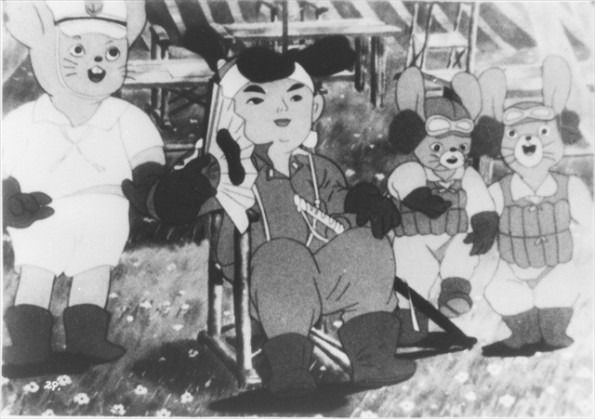
    It’s time for the review I’ve been dreading, ever since the blog started: “Momotarō: Umi no Shinpei” / “Momotaro: Sacred Sailors” or “Momotaro’s Divine Sea Warriors”.

  • 1944: MOCHINAGA SUBMERGES

    1944: MOCHINAGA SUBMERGES

    One film from this year is watchable. It was the directorial debut of MOCHINAGA Tadahito. Geijutsu Eigasha hired MOCHINAGA in 1941, to build Japan’s first multiplane camera for SEO Mitsuyo.

  • 1943: MASAOKA, OFUJI AND THE LOST

    1943: MASAOKA, OFUJI AND THE LOST

    The next animated film to come out in Japan – that still survives, of course – baffled me before I watched it, because I didn’t see how it could have been made.

  • 1943: HISTORY AND SEO

    1943: HISTORY AND SEO

    By the first week of February 1943, Japan had left Guadalcanal for good. Throughout this year, Japan’s armed forces suffered loss after loss, and by September had established a new naval perimeter.

  • 1942: THREE WATCHABLE CARTOONS

    1942: THREE WATCHABLE CARTOONS

    For 1942, there were only three cartoons which I have been able to see. So I’ve reviewed them.

  • 1941: YAMAMOTO AND THE WAN BROTHERS

    1941: YAMAMOTO AND THE WAN BROTHERS

    As I hope has already become clear, this period of Japanese animated film-making is either superbly and precisely documented, or involves 85% guesswork.