
KŌUCHI JUN’ICHI’S LAST STAND
Only one of the three pillars of the original 1917 Japanese animation boom was still in the industry by 1924. KŌUCHI Jun’ichi had gone back to making manga. But retired politician, Count GOTO Shinpei, managed to bring him out of retirement. Goto had been Minister of the Interior in 1923, and so it had fallen to him to rebuild Tokyo after the Great Kanto Earthquake, against enormous opposition on all fronts.
After he left frontline politics, Goto hired Kōuchi to make a series of animations, promoting his political ideals. They made four in 1925; “To Save The Nation”, “Wake Up, Voters”, “City Reform” and “Budget Politics”. I didn’t realise that insomnia was such an issue in Japan at the time. The pair’s last animation that I’m aware of was “Seiji no Rinrika” / “The Ethicalisation Of Politics, Shinpei Goto” (Sumikazu Eiga, 1926). But I couldn’t make myself watch what’s mostly a speech about voting rights printed in kanji.
According to his biography on Japanese Wikipedia, Kōuchi continued to work with the increasingly politically irrelevant Goto until the politician’s death in 1929. After that, he only made one more animation, 1930’s “Chongire Hebi” / “Cut Up Snake” (Unknown, December 1930). It’s not available online. After making it, Kōuchi would return to making political newspaper manga. He would pass away in October 1970. But not before taking an apprentice who would become one of the biggest names in anime history.
THE NEW PILLAR : OFUJI NOBURO
In 1962, Japan’s biggest cinema awards, the Mainichi Film Competition, would receive a donation from OFUJI Yue. She was the older sister and assistant of the man they would name their premier animation award after: Kōuchi’s apprentice, OFUJI Noburo. The Ofujis had started making animation in 1926 as the Free Film Institute. Their first trial was that year’s “Kemurigusa Monogatari” / “The Story Of Tobacco”. It was originally a 6-minute long film, but only half of it survives. It’s a hybrid of live-action and what would become Ofuji’s signature chiyogami technique. It isn’t animated enough to get a score.
But it does mean I have to discuss chiyogami. It’s made from washi paper, made using fibres from a handful of trees native to Japan. The way it’s made makes it tougher than most other kinds of paper, he said like he understood. Woodblock printing on to this paper was used as early as the 8th century CE for religious reasons. But chiyogami was the 18th century or Edo period technique of hand-printing bold colours on to it, usually to decorate the home.
Cutting those bold prints out for his animation was Ofuji’s masterstroke. He would call his home studio “Chiyogami Eigasha” as a result. There’s a concern in the back of my mind that the masterstroke was Yue’s, not her brother Noburo’s, but there’s no evidence to show it. Mind you, that was the case for a lot of other innovative women in history. Anyway.
THE LAZIEST MAN IN BAGHDAD
Ofuji’s first proper release was “Baguda-jou no Touzoku” / “Burglars Of Baghdad Castle” (Jiyu Eiga Kenkyusho, July 1926). This film starred “the laziest man in Baghdad”, wearing what would become his signature spider-web kimono: Dangobei. He’s quickly shown to be a racist and a thief. But as soon as he thinks he might gain the hand of a princess, he starts putting the work in.
First he kills off a centaur to save a passing Snow Fairy, and then outwits a beautifully created dragon using the Fairy’s advice. Once he has the wishing-stone treasure for the princess, a dragon-horse flies him home; usefully, his home is under attack, so Dangobei burns the wish to summon his own enormous army, saves the day and marries the princess.
The original version lasted half an hour, which is enormous by the animated standards of the day. The existing version is a 14-minute edit, and would be superb if only there was a soundtrack. That’s not going to stop me from rating “Burglars Of Baghdad Castle” at 8/10.
ARTISTIC IMPRESSIONS
The effect of the use of chiyogami was enormous in a way I hadn’t expected. I’m writing about each creator in turn, but I’ve been doing my best to watch everything in order. Everything that came before this film was, to all intents and purposes, animated on a single plane, so if two elements on the screen crossed, then they effectively merged.
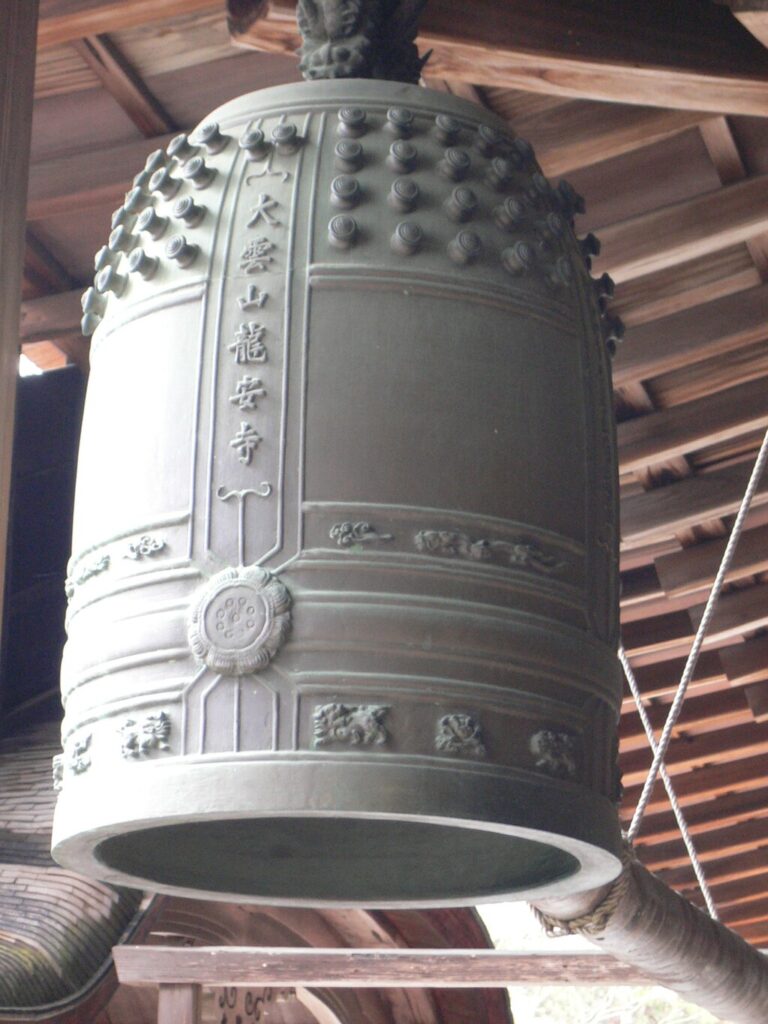
But because Ofuji was literally putting one piece of paper on top of another one, he pulls off a Trompe-l’œil effect, tricking the viewer into seeing a depth of field that wasn’t there. Something as simple as the ringing of a ritual bell looks fantastic, because the bell and the bellframe around it are separate, physical paper objects. In context it’s brilliant; I’m not surprised that it was successful enough to make Dangobei the studio’s central character going forward.
ENTER THE MONKEY KING
Ofuji’s next work, originally a near-feature length 51 minute epic, was “Saiyuki: Son Goku Monogatari” / “The Story Of The Monkey King” (Jiyu Eiga, October 1926). And if you’re a modern anime fan, quite a lot of those Japanese words will look and sound familiar. This was the first of many animated adaptations of Chinese literary classic “Journey To The West”; the version that survives is only – ha! – 8 minutes long, and covers the forming of China’s first adventuring party.
Buddhist monk Xuanzang is journeying westward, from China to a temple in India, to bring their scriptures back home. On the way, he encounters Sun Wukong, the Monkey King – wearing a suspiciously familiar spider-web kimono, hello Dangobei – who’s been trapped in a rock for being too cheeky. Xuanzang releases him to act as his servant; Wukong defeats a pig monster and a kappa, a water demon, who also become the monk’s servants. After trapping another monster in another rock, Wukong unlocks the temple his master was looking for, and the party are promised that the scriptures will be delivered in a dragon-drawn carriage.
The fights are all very well done, all things considered, but the story left me wanting more. That’s hardly the restorers’ fault, you can’t make bricks without clay, but this story deserves a better and deeper treatment than the truncated one we ended up with. “The Story Of The Monkey King” gets 6.5/10.
the end
On Christmas Day, 1926, Emperor Taisho died of a pneumonia-related heart attack at one of his villas near Tokyo. Prince Regent Hirohito became the Emperor Showa, and the pace of change in Japan – and in it’s animation – would soon increase to terrifying levels.
I would like to give my usual thanks to this blog’s four pillars; AniDB, whose peerless database has helped me work out what to look for, the Japanese Film Archive, who have given me the material to actually watch, Jonathan Clements & Helen McCarthy’s “Anime Encyclopedia”, and Clements’ “Anime: A History”. The image above was provided by Syohei Arai, CC BY-SA 4.0, via Wikimedia Commons.

Join me next time, as I continue to try and turn various people’s attempts to make money from animation into a coherent story. Until then, this has been Douglas Watches Every Anime. Peace; out.
Leave a Reply