Tag: Ofuji
-
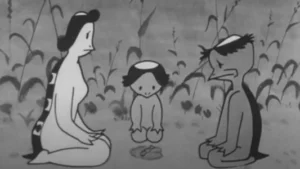
1954: KAPPA, DOG AND BUTTERFLY
Japanese animation wasn’t quite at rock bottom in 1954, but it wasn’t far away.
-
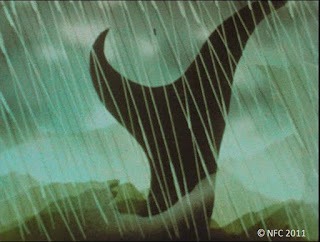
1950-1953: GULLIVER TRAVELS
Ofuji Noburo wasn’t the kind of person to let a little thing like the total collapse of the Japanese animation industry stop him.
-
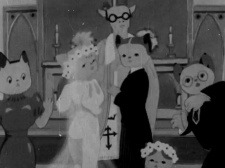
1948: MORINO, MASAOKA & OFUJI
This year, OFUJI Noburo got back into the studio to make “The Bear Dodger”.
-
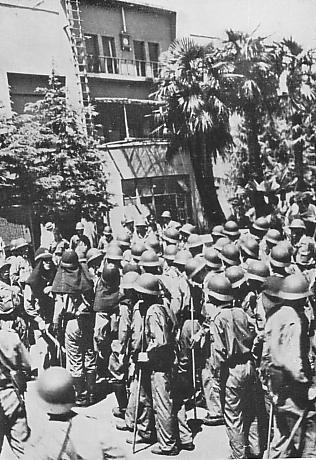
1948: THE BATTLE OF KINUTA STUDIO
In early April, Watanabe’s new leadership fired 1200 employees, including “all forty-two animators”.
-
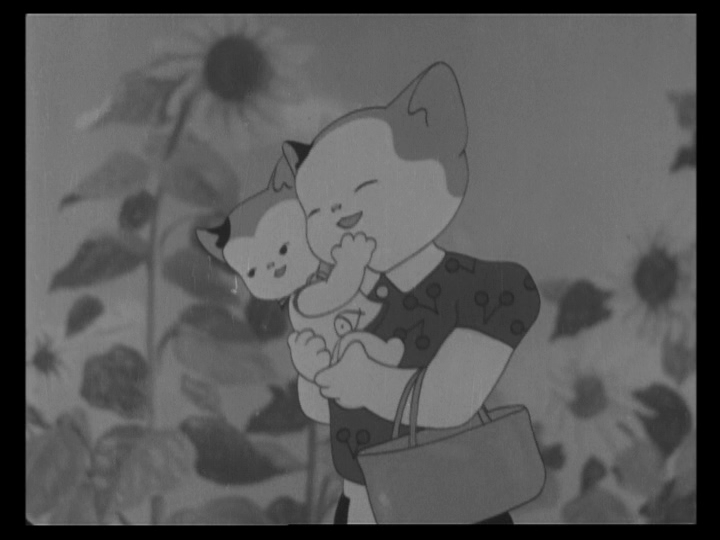
1947: MASAOKA’S POWERPLAY
The third film on the bill was Masoaka’s “Tora The Stray Cat”, and it had the most complicated credit list I’ve seen so far.
-
1946: KUMAKAWA’S MAGIC PEN
OFUJI Noburo’s 1946 cartoon was the first animated version of any work by AKUTAGAWA Ryunosuke.
-
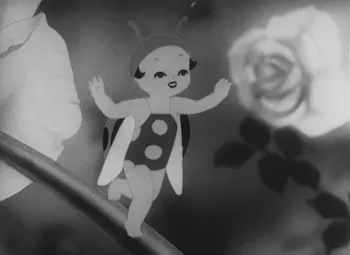
1943: MASAOKA, OFUJI & THE LOST
The next animated film to come out in Japan baffled me, because I didn’t see how it could have been made.
-
1939: WHEN DIPLOMACY FAILS
Japan gets outmaneuvered, as World War II starts in Europe. Thankfully, a few people are still making animation.
-
1937 – THE BEGINNING OF THE END
Only three pieces of animation from Japan in 1937 have made it to the present day.
-
1936: MURATA’S END
On February 26th 1936, a group of young military officers attempted to overthrow the Japanese government; a coup d’etat.