
IT’S ONLY A CHIYOGAMI MOON
OFUJI Noburu was, first and foremost, an experimental film-maker. Since 1929, he had been working to make soundtracked films, using a new sound-on-disc system, produced by Japanese audio firm Eastphone. These were the “record talkies” I’ve mentioned. Each film shipped with an 18-inch vinyl record, far larger than the standard 10-inch, 78rpm home standard of the time. Cinemas showing them started both media at the same time so they synchronised, and it seems to have worked.
While Ofuji’s film from 1930, “Village Festival” was arguably the first of these, he compiled it from older, recycled footage. He made the first completely original record talkie to fill a demand from movie theatres. The tradition of playing a National Anthem before a play or film was alive and well in 1931. BANNO Bunzaburo of film company Banno Shoten wanted to extend that to cartoons.
Ofuji must have seen this as a golden opportunity to get his new soundtracking technology into theatres. He rarely turned down a chance to experiment with silhouette animation. This was both the things he enjoyed at once. The result was “Kokka Kimigayo“/ “National Anthem, Kimagayo” (Chiyogami Eigasha, February 1931).
“National Anthem, Kimagayo”

The national chrysanthemum flower opens to reveal the gods of creation. Izanagi and Izanami are creating the islands of Japan with their heavenly spear. The text of the anthem appears over the island backdrop. Then we see a group of gods gathering outside a cave; one of them opens it, and light floods out. We see the bow of Japan’s legendary first Emperor Jimmu, and the bird that landed on it during a decisive victory. Then the three royal treasures of Japan are shown in front of the chrysanthemum flower again, and the film ends.
This plays out over a solemn and beautiful rendition of the anthem performed by Tokyo Music School. I think that’s the choir of Tokyo College of Music. Ofuji is brilliant here, blending silhouette figures with chiyogami backgrounds to wonderful effect, and his scene transitions are simply perfect.
I struggled a bit to understand the action, though. Quite understandably, the writers at the Japanese Film Archive assumed that whoever was reading their blurb already knew the story! But that’s a me problem. Regardless, this is just beautiful; “National Anthem, Kimagayo” gets 8/10.
All Tech’ed Up And Nowhere To Go?
The next cartoon that Ofuji produced had been stuck in development hell since 1929. He had his new record-talkie technology, but money was incredibly tight for him. There can’t be a lot of cash in hand, if you’re having to rely on private money to arrange the playing of your national anthem in a time of enormous nationalism. So where do you look for audio? Well, you do what Merrie Melodies were doing at the same time. You get the rights to a pop song, and you make a cartoon around it.
“The Black Cat”
That’s how you get to “Kuro Nyago” / “The Black Cat” (Chiyogami Eigasha, 1931). The song’s story is a simple one. A quartet of children in familiar spider-web kimonos want a cat, so the Cat Distribution Network supplies two. The cats then earworm you for months with a sweet little song. That song was by 11-year old star HIRAI Hideko.
This is classic Saturday Picture Show stuff. My grandfather was watching quite similar things at the same time in South Wales. Granted, that was cowboys, smart dogs and Disney’s mouse instead of samurai, goofball students and Ofuji’s cat, but the principle was the same. Granted, the characters are all chiyogami-thin, but it’s not like my tad-cu was watching Clarabelle Cow perform Shakespearean monologues. Actually I’d quite like to see that.
Never mind. This cartoon made me smile. Ofuji’s technological leap means that the song fits the on-screen action perfectly. It doesn’t hurt that it’s quite a good one for the period, too. Ofuji was doing a lot with a little, and so “The Black Cat” scores a very creditable 5/10.
“Spring Song”
“Haru no Uta” / “Spring Song” (Chiyogami Eigasha, April 1931) was another record-talkie, this time tinted pink to fit the theme. INOUE Kikuko of the Asakusa Opera sang the piece. This is an equally simple animation, loaded with uniquely Japanese symbolism around spring, cherry blossoms and young love. I was lucky enough to find a version with the audio intact. Once again I think Ofuji was making decent bricks without much in the way of clay to do it with. “Spring Song” also gets 5/10.
Finally for this year, Ofuji brought Dangobei back. Everyone’s favourite coward-turned-hero dons his spider-web kimono again to lead “Kokoro no Chikara” / “Will Power” (Ministry Of Education, September 1931). Ofuji borrowed the story from Harold Lloyd’s second feature-length live-action film, the hugely successful “Grandma’s Boy“. I had a sickly childhood, and seeing a Lloyd compilation on the BBC while lying on the front room sofa was often a highlight. Time to use my favourite question again; was this any good?
“Will Power”
We’re told of a fairy-tale castle with a beautiful princess, and that Dangobei lives in the town underneath. A couple of kids send their dog after him, and the tree Dangobei chooses to hide in has a cat in it. After the inevitable fight, the dog recovers and chases Dangobei into a temple, where he prays for strength and courage. An omomori, one of those bookmark-looking Shinto amulets, falls into his hands, and makes him believe he’s the “strongest in Japan”.
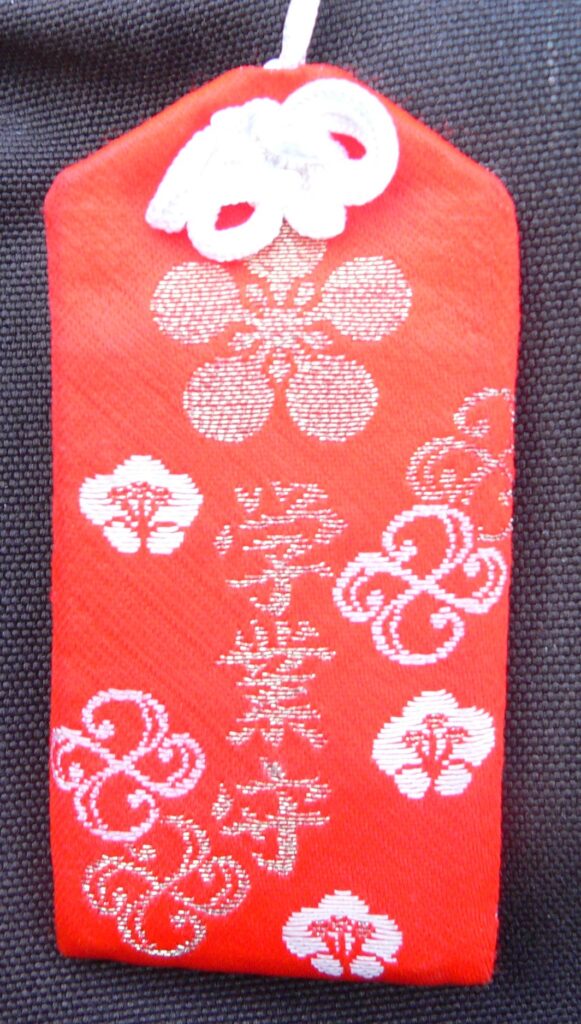
Suitably empowered, Dangobei literally knocks the dog’s head off – thankfully it’s a cartoon so he gets it back – and suitably cowed, the dog and cat accept him as their master. Conveniently enough, someone’s holding a swordmanship tournament for the throne and the hand of the Princess, and Dangobei thinks he’s qualified. Thankfully, so does the Princess. The charm gives him the confidence to win handily, but one of his foes kidnaps the Princess that night and flees in a boat.
Dangobei leads the charge to save her, with the dog and cat providing some comic-relief pratfalls along the way. When he swims to follow the villain, he leaves the charm behind – which he only discovers after the baddie’s been eaten by an oni. Dangobei swims away again, and finds what he thinks is the charm. He hacks the oni to bits and wins the Princess’ hand, only to discover he only had the charm’s case. It flips over to reveal the moral; “bravery and cowardice are both states of mind”.
Compare and Contrast
When Yamamoto Sanae tackled folk-hero Momotaro, I mentioned a version of the story where he beats his allies into submission, instead of simply bribing the simple animals with food. I was reminded of that darker, more imperialistic take on Momotaro’s legend while watching this. The charm turns Dangobei into a dominant, heroic leader. It’s only a coincidence that this cartoon came out in September of 1931, but as I’ll discuss in a future post, that month was a significant one for Japan.
The cartoon borrows the basic Magic Feather plot and overall structure from “Grandma’s Boy”, but that’s not a plagiarism issue. While the setting was completely Japanese, the pacing of the story felt more Western to me. Either way, while it was well-executed and superbly animated, I wasn’t gripped emotionally in the way that the best of Ofuji’s work has managed. “Will Power” gets 6/10.
fin
I must thank Crunchyroll, who provided “The Black Cat”, and Nishikata Film Review for information about “Song of Spring”, and “National Anthem, Kimagayo”.
And as usual, I want to thank AniDB, who have helped me work out what to look for and the Japanese Film Archive, who have given me the material to actually watch. Next time, I’ll be clearing up all the cases from 1931 where the cartoons have been found, but the creators have been lost.
The omamori image is by Rama, CeCILL http://www.cecill.info/licences/Licence_CeCILL_V2-en.html, via Wikimedia Commons.