
MITSUYO’S RETURN
So. Time to talk about the film that nearly ended anime before it began: “The King’s Tail”.
Back in January 1948, SEO Mitsuyo had joined Toho’s animation division. At the time this was a huge get. Seo had directed Japan’s two longest cartoons to date. Both were propaganda works featuring Japanese cultural icon Momotaro: “Momotaro’s Sea Eagles” in 1943, and “Momotaro: Sacred Sailors” in 1945. The latter was the first Japanese animation to crack the one-hour mark and count as “feature length”.
Toho’s then-new director, WATANABE Tetsuzō, assumed that the animation field would be full of competition from rival studios, Daiei and Shochiku. In order to get ahead of them, he commissioned a new feature-length cartoon: “Ousama no Shippo” or “The King’s Tail”. It was based on “The Emperor’s New Clothes” from 1837, by Danish author Hans Christian Andersen. The joke seems to have been that the central character was a tail-less fox. My best guess is that the “tail-ors” in the story pretended to make him a new one.
In his indispensible “Anime: A History”, Jonathan CLEMENTS says1 that in Toho’s cinemas, the film would have the main attraction, with a couple of Nichido shorts being shown first. He hints that “Animal Baseball Battle”, which I talked about last week, may have been made specifically for that purpose. But the main attraction was exactly what it said on the tin. “The King’s Tail” was essential.
An Enormous Tail
And it was enormous. According to animator SOJI Ushio2,
“It was a spectacular work using forty animators, 100,000 cels and with a production budget of six million yen.”
And nobody outside the studio offices saw a frame of it. When Watanabe watched the finished article in October 1949, he hated it. He said it was “riddled with Redness”3 and cut it from fifty-seven minutes to thirty-three. He’d been hired specifically because he was ridiculously right wing, of course. But in 1948, he had mishandled a labour dispute so badly that the US Cavalry had to bail him out.
And when someone asked him to take a second look, he doubled down and deemed it unreleasable. From an anime history point of view, Watanabe had just killed Toho’s animation division stone dead. They would release a single cartoon in 1950. The company’s name wouldn’t appear on anything that remotely qualified as “anime” until 1981’s “Meiken Jolie” / “Belle And Sebastian”.
Aftermath: Farewell, Seo Mitsuyo
He also killed Nihon Manga Eigasha. Unable to make a penny back on the enormous outlay involved in making an hour-long cartoon, the company folded. That took down the careers of many of the animators who had kept the industry going through the wartime years4. Three of the film’s lead animators quit the business completely, to work in the children’s book and comic market5. Most notably, if forced Seo Mitsuyo himself out of animation. He would pass away, after a long and successful final career in illustrating books, in August of 2010.
The debacle also drove MURATA Yasuji out of directing. He didn’t leave animation, though. In 1956, he finally got to put his own name above the front door. Murata Seisakusho would mostly make adverts and promotional films. As far as I’m concerned, he was one of the greats of the Japanese pre-war era. Murata Yasuji he passed away on November 22nd, 1966.
EDITORIAL: What The Hell, Dude?
I rarely get angry when I’m writing these blog posts. Bilious, yes. But watching cartoon characters fight in real wars and studying war crimes would make anyone want to throw up. Watanabe Tetsuzō’s pigheaded insistence on protecting the Japanese people from supposed left-wing influence, in the shape of a cartoon that he himself commissioned, based on a story about the foolishness of unthinking obedience to one’s social superiors6, very nearly killed anime before the American Occupiers left Japan.
Between 1950 and 1959, as far as I can tell, the entire Japanese animation industry managed to produce forty cartoons. And that is a very generous count. For comparison, in the single calendar year of 1950, the United States produced one hundred and fifty two.
Granted, Shochiku and Daiei’s decisions to stay out of the post-war animation business couldn’t have helped. But I still think it’s fair to say that the majority of the blame for the collapse of the Japanese animation industry in this decade can be laid at the feet of one man. As an anime reviewer and amateur historian, I think I have a right to be a tiny bit miffed.
In 1950, his damage to the animation and live-action film industries done, Watanabe quit Toho to run for the Japanese Upper House and failed completely. Even Toho’s official wiki suggests this was because of his mishandling of the 1947 strike. But as such men so often do, he managed to fail upwards. By 1956 he was chairman of Eirin, the Japanese film regulator. Across the rest of his life, he would occupy various committee posts with impressive sounding names, and would pass away in April 1980 of heart failure. He was 94.
fin
But the beat, somehow, went on. And thanks to the stubbornness of certain Japanese animators, a slow trickle of cartoons and stop-motion puppetry was still made. Yes, you know who I’m talking about.
As usual, my thanks go out to AniDB, who have helped me work out what to look for, and the pairing of Jonathan Clements & Helen McCarthy and their “Anime Encyclopedia”, and Clements’ own “Anime: A History”. I also want to thank IMDB.
Next week, this blog will take in four years at a single bound. I’ll do my best to explain which cartoons were still being watched in Japan, and why.
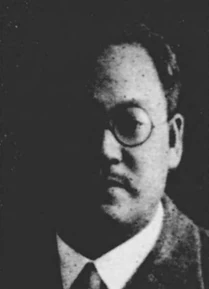
Image of Watanabe taken from Tohopedia.
- Jonathan Clements “Anime: A History”, p. 117, 2023 ↩︎
- Ushio Soji, “Tezuka Osamu to Boku” / “Tezuka Osamu and I”, p. 222, 2007, in Jonathan Clements “Anime: A History”, p. 118, 2023 ↩︎
- Soji, ibid ↩︎
- Not that I’m condoning everything they did at the time, of course. ↩︎
- Jonathan Clements “Anime: A History”, p. 118, 2023 ↩︎
- If anyone can explain to me how this story is remotely Communist, I’d love to hear it. ↩︎
Leave a Reply