
J.O. STUDIO PICKS DUMPLINGS OVER FLOWERS
Like so many studios before them in the period, Jenkins Osawa Studio quickly discovered that no matter how small your production line was, you couldn’t make money from animation without government support. It’s entirely possible that their animation department in 1935 was one man; ICHIKAWA Kon.
JO made four cartoons in 1935 – the Dumplings Over Flowers series starring samurai Dangonosuke in various situations. They were, in no particular order, “Pom Poko Saga”, “Flying Into The 47 Ronin”, “The Megumi Quarrel” and most notably,”Yowamushi Chinsengumi” / “Cowardly Samurai Squad”. All four were thought lost for decades. But the Academy of Motion Picture Arts and Sciences found the last one in 2014. You know them better as the Oscars Academy. They might still be cleaning it up: it’s not online.
The series name is interesting; “Pick Dumplings Over Flowers” is a Japanese proverb, meaning that it’s wise to choose practical things over flashy ones, to prefer substance over style. In 1992, the proverb would inspire a romantic comedy manga by KAMIO Yoko called “Boys Over Flowers”. That manga would see live-action adaptations across East Asia; the anime adaptation from Toei in 1996 would be their last cel animation. I might get there one day.
Toho Stops Messing About
JO Studios stopped making cartoons in 1935. On September 10th, 1937 they joined Photographic Chemical Laboratories and a distribution company called Toho Eiga to form Toho Studios, the behemoth that would eventually make the Godzilla films, and more than a few anime, even if the path there would be rocky at best.
I don’t think Ichikawa made many more cartoons. Yes, he might have made a version of “Mount Firecrackle”. But that’s been attributed to so many animators it made my head spin. Ichikawa would have a hugely successful career as a live-action director. He would win a Jury Prize at the Cannes Film Festival for “Odd Obsession” (Daiei Film, 1959) and two BAFTA Awards – the British Oscars, if you like – for his work about the 1964 Olympic Games, “Tokyo Olympiad” (Toho, 1965). But in an interview in 2001, he told American film writer Donald Richie that “I’m still a cartoonist”. Ichikawa passed away in Tokyo in 2008, at the grand old age of 92. It’s nice to see a creator get a happy ending on this blog for once.
MASAOKA LOSES HIS BET
1935 was the year when MASAOKA Kenzō’s attempt to run a flashy, American-style studio finally failed. Masaoka spent enormous sums on The Masaoka Film And Art Institute, with cel animation and an audio studio. But he simply couldn’t make it pay. He managed to get four cartoons out of the door in this year, before shutting up shop.
Two of them featured Ta-chan, a princess-y character who seems to have been an attempt to create a female lead like Betty Boop. Her two cartoons were “Ta-Chan’s Underwater Adventure” and “Ta-Chan’s Monster Adventure”. Only the former has any footage available online, and it’s hard to watch in two senses. The film quality is very poor, and I think it’s more warmongering. Even if I could see it properly, I doubt I’d want to score it.
There’s another completely lost film, “Fairy Forest”. But the fourth cartoon that Masaoka made in 1935 still exists. It’s the oldest Japanese cel animation that can be seen today. It’s called “Chagama Ondo” (Masaoka Eigasha Bijutsu Kenkyu-jo, 1935) which in English is either “The Dance Of The Chagamas” or “The Teakettle Marching Song”. And that needs unpacking.
so what are “chagama” and “ondo”?
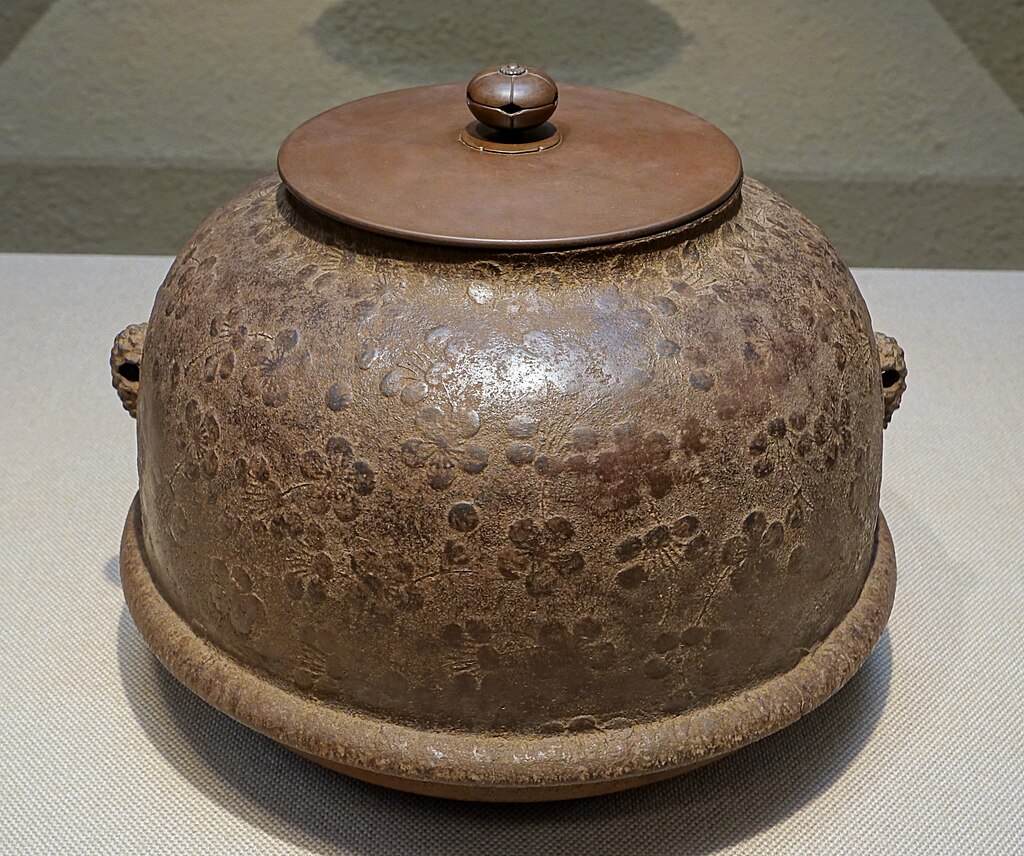
A chagama is a cast-iron kettle, made for boiling water, to use in the traditional Japanese tea ceremony. There’s a famous story called “Bunbuku Chagama”, where a kettle turns out to be a tanuki in disguise; there were already two cartoons based on it by 1935, but – sing along at home folks! – neither of them survives to the present day.
An ondo, on the other hand, is a traditional Japanese song style that’s a swung 2/2; two beats to the bar, of differing lengths. If the word sounds familiar, that’s because various modern anime series have used pieces written in this style, most notably the opening titles of the 1989 version of “Osomatsu-kun”.
So now you know what the title means. Was the actual cartoon any good?
“Chagama Ondo”
A pair of monks dance to a record player, and the notes drift out to a group of walking animals. They dance to a valve radio, but it doesn’t seem to work properly. We follow a tanuki called Ponkichi as he transforms into a samurai who flies to the clouds and nordic-skis along them. He sneaks into the monks’ temple and steals their record player and some sake while they’re asleep.

Image provided with permission by The Rewind Museum.
But he falls into a pit trap, and the monks capture him. His family fly to the rescue; they transform into teakettles and sing their titular song to the senior monk, telling him how stupid he is. The tanuki family escape with the record player, and walk home on the clouds, listening to it.
There are some very smart puns in this one, and a couple of clever musical touches, as you would expect from a cartoon based around a song. But there are some weird jumps that make me certain it’s incomplete. Thankfully the sound is still in one piece, otherwise this wouldn’t have landed at all. But given what we have left today, “Dance Of The Chagamas” ends up at 5/10.
Masaoka Moves Past Failure
Once his studio folded, Masaoka spent some time away from animation in the ink-and-cel sense. He was hired by JO Studios to work on a version of “The Tale Of The Bamboo Cutter” called “Princess Kaguya”. If that name sounds familiar, it’s because her story would show up in various anime, most famously in 2013’s “The Tale Of The Princess Kaguya” by Studio Ghibli. But I’m getting miles ahead of myself.
The 1935 version was live-action, but cinematographer and future Godzilla co-creator TSUBURAYA Eiji hired Masaoka to handle the special-effects work. Masaoka wouldn’t be short of work going forward, either.
OGINO GOT RHYTHM?
OGINO Shigeji was continuing his work on animation when he really should have been minding his fuel store. Three of his cartoons from 1935 are available online; “Rhythm”, “Propagate” and “An Expression.”
“Rhythm”
Despite the title, Ogino’s “Rhythm” (independent, 1935) doesn’t have the soundtrack I was hoping for. It hasn’t got one at all. But Ogino continued to innovate with this absolute film. “Absolute” was an experimental style of German film, and visual rhythm was a key method in expressing the ideas behind it.
The title appears in jagged, art deco English lettering. The animation itself is a series of short sections, each one a set of mesmeric, twisting loops. It looked like a recording of different black and white, geometric kaleidoscopes, all spinning at different speeds. It took me back to my clubbing days in the 1990s, and the sound-to-light programs they would run through the TVs in the venue. Here’s an example, but here’s also a FLASHING IMAGES warning. Be careful.
I am not going to score it, because it’s another pure art piece, and I’m not totally sure I understood it. But it was certainly interesting.
“Propagate”
“Propagate” (Small Film Writers Association, 1935) has a wonderfully geometric opening title card, and almost all the text in the film is in English. I think Ogino-san is showing off a bit. As I’ve come to expect from his work, this is spinny and more than a little trippy. The ideas it claims to be teaching – about how plants reproduce – are just about there, but the subject isn’t anywhere near as important to Ogino as the style.
Luckily, I’m into that. Don’t watch it if you’re easily dizzied, but “Propagate” gets 6/10 from me.
“An Expression”
Finally for this year, “An Expression” (Small Film Writers Association, 1935) comes with another FLASHING LIGHTS warning from the Japanese Animated Film Archives, so once again, please be careful. It’s because this an attempt to cheat in colour before the technology was there. It’s black and white, with alternating red and green filters stuck on top.
The Archive’s notes tell me that this is the meeting between a circular country woman and a triangular city man. Literally those shapes. You can tell it’s art when you can’t understand it without the viewing guide. I didn’t understand it anyway, and I had to stop when the flashing started to give me a headache. No score, but this is the most obviously experimental piece of Ogino’s so far.
MURATA SLOWS TO A CRAWL
The single most reliable director/studio partnership in Japanese animation, from its resurrection in 1927 to 1935, has been MURATA Yasuji and Yokohama Cinema Shokai. But they would only make one film in each of the next two years. They even lost one of their popular characters along the way. And I can’t quite work out how.
Murata’s sole surviving effort in 1935 was “Umi no Mizu wa Naze Karai” / “Why Sea Water Is Salty” (Yokohama Cinema, 1935). My thanks go to Rachel Thorn, for providing the subtitles for this story, based on a Norwegian fairy-tale.
“Why Sea Water Is Salty”
Two brothers, one rich and one poor, argue over a New Year’s rice cake. Walking away empty-handed, the poorer brother saves an old man from falling off a bridge. The old man gives him a bag of steamed buns and sends him to a nearby forest, saying that he can trade it with the local dwarves for a stone hand mill.
We see the dwarves logging away, and the man helps them to build wooden houses. They offer him food, and he pulls out the buns to the dwarves’ delight. They’re not so pleased when he offers the swap, but they take it anyway. The mill will make whatever he wants when he spins it one way, and stop when he spins it the other. He spins out a palanquin and two bearers, who carry him back into town.
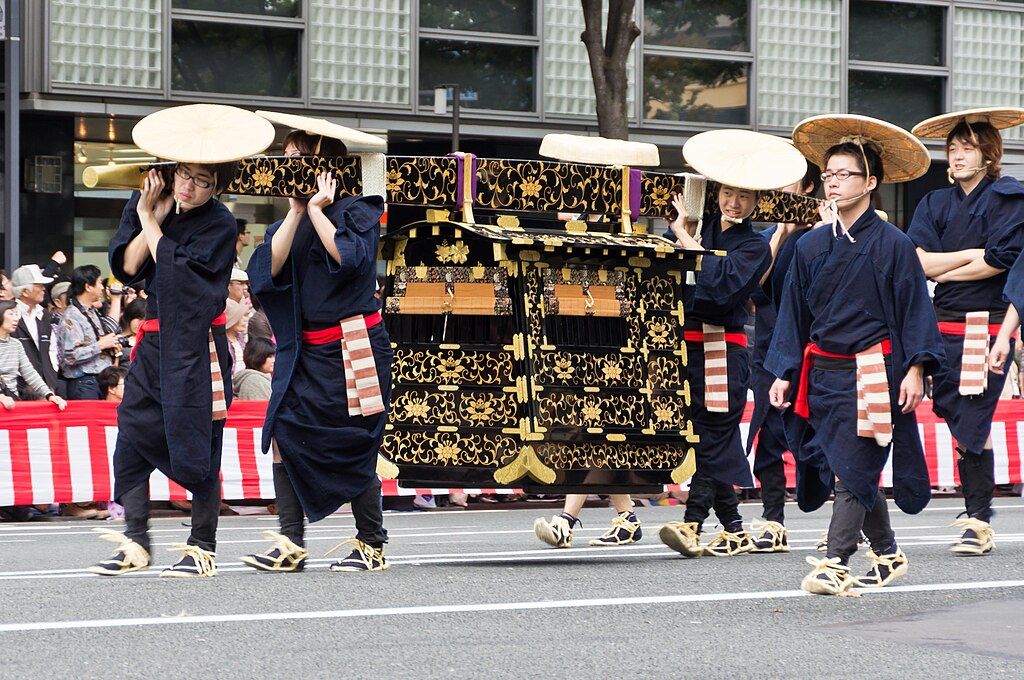
Soon the poor man spins out everything he’s ever wanted, and now he’s rich. His brother asks him for a go on the mill, but the man says no – he’s still pretty rich, he doesn’t need it. Naturally, the greedy brother steals the mill and flees on a boat. He’s got plenty of food but no salt; he sets the mill to spinning but doesn’t know how to stop it. The boat fills with salt and sinks. A passing shark eats the greedy brother. But the mill never stops, which is why the sea is salty.
deep waters, high score
This is a fairly faithful interpretation of the original tale, with a few Japanifications along the way. Murata’s work was always good, but this cartoon has taken a leap forward in realism and quality. There are clear emotions on display here from the first scene, and when the poor brother pulls out a bun, both it and his hand are drawn superbly. The tale is beautifully told, and all this needed to be absolutely perfect was a soundtrack. “Why Sea Water Is Salty” gets 9/10 for an ironically sweet version of an old, old tale.
FIN
I would like to give my usual thanks to this blog’s pillars; AniDB, who have helped me work out what to look for, the Japanese Film Archive, who have given me the material to actually watch. In addition, I’d like to thank Cinema PR, Pantov for the techno, and Rachel Thorn.
The valve radio image is from the Rewind Museum, republished with their permission. The chagama image is by Daderot, Public domain, via Wikimedia Commons. Palanquin image is by Rainer Haeßner, CC BY-SA 3.0 https://creativecommons.org/licenses/by-sa/3.0, via Wikimedia Commons.
Leave a Reply